Clinical mobility is undergoing a major reset. Hospitals that once depended on workstations on wheels, hallway desktops, or an inconsistent mix of mobile tools are now rethinking the role shared devices play in care delivery. As patient loads rise, workflows intensify, and clinicians move constantly throughout their shift. The pressure to create a seamless, dependable mobile experience has never been higher. When working as intended, shared devices become the connective tissue that keeps care teams aligned, efficient, and ready.
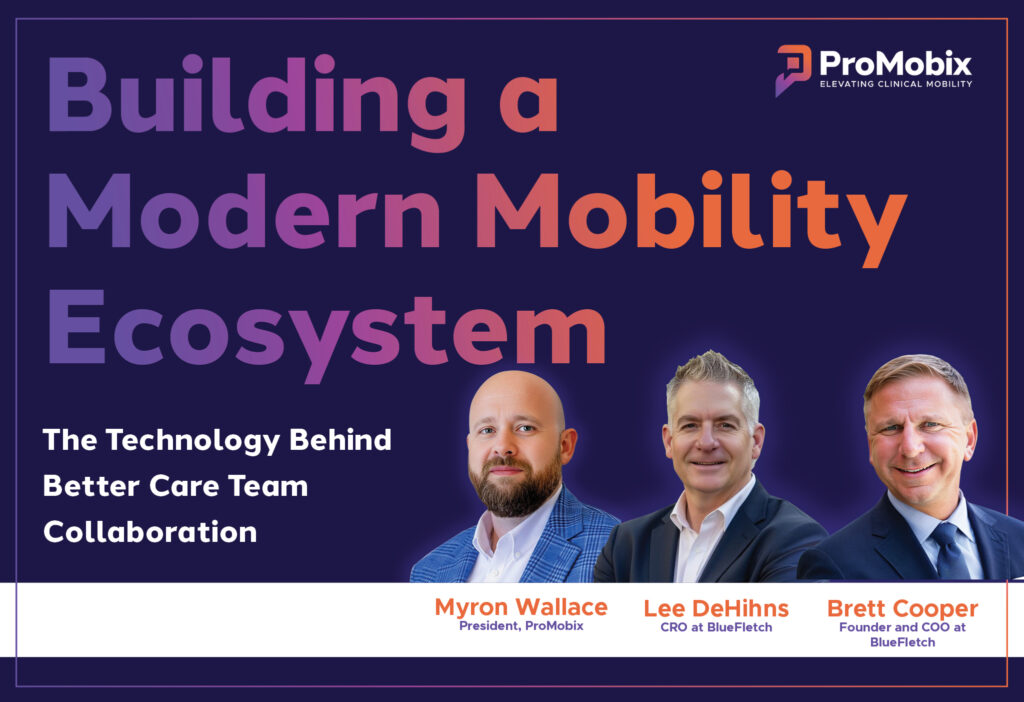
That’s why insights from leaders like Brett Cooper, Founder & COO of BlueFletch, and Lee DeHihns, the company’s Chief Revenue Officer, are especially relevant right now. Both have spent years building and refining frontline mobility solutions across industries like retail, logistics, and now healthcare. Their work centers on eliminating the friction that slows down clinicians, slow logins, scattered apps, device handoff issues, and security risks.
Their cross‑industry expertise gives them a unique vantage point: they’ve already seen what happens when mobile ecosystems scale, and what breaks first.
The Hidden Friction Slowing Down Care
While shared devices have been present in hospitals for years, using them hasn’t always been easy. Many clinicians still juggle multiple passwords, log into several apps individually, or inherit devices left logged in under someone else’s credentials. These interruptions compound across a shift. Something as small as a 30‑second login doesn’t sound like much, until it’s repeated dozens of times per person, per day, across hundreds or thousands of users.
“We are making sure that the caregiver has technology at his or her fingertips to make their job easier,” said DeHihns. “Not something that’s going to add an additional friction point.”
This friction creates a ripple effect. When the steps required to access tools feel cumbersome, clinicians either delay documentation or find workarounds that introduce risk. In high‑pressure care environments, seconds matter. And yet, the foundational act of accessing a device remains one of the biggest workflow barriers.

What Healthcare Really Needs: Fast, Seamless Authentication
That’s why modern mobility strategies are putting authentication front and center. Instead of defaulting long passwords and outdated login flows, hospitals are rethinking the first touchpoint entirely. Technologies like NFC badge tap, short PIN verification, facial recognition, and fast user switching are transforming the moment a device changes hand. The goal is simple: make authentication nearly invisible.
With platforms like BlueFletch, login times drop from nearly half a minute to just a few seconds, and devices automatically adjust to the clinician who signed in. Apps, communication tools, and notifications shift based on the user’s role, not just their identity. A floor nurse sees what they need. A charge nurse sees something different. A phlebotomist gets an entirely different toolset. And when the next clinician taps in, the device resets instantly.
The device becomes something healthcare hasn’t had enough predictable.
Making Sense of a Fragmented App Ecosystem
Healthcare’s digital landscape has grown organically over decades, leaving most hospitals with a mix of legacy systems, modern applications, and everything in between. A clinician might need to interact with an app running a modern identity standard like OIDC, another based on Microsoft’s authentication framework, and yet another still relying on a username and password stored in a 20‑year‑old database.
“You have these different integration points that may not be compatible… you need BlueFletch in the middle so it can handle talking to all of those,” said Cooper.
Without a strategy to unify these authentication experiences, mobility becomes chaotic. Modern mobility platforms act as the bridge, integrating with the MDM, the EHR, the communication tools, and every critical app so clinicians don’t have to think about which system uses which login. They get one clean, consistent access point. IT teams get centralized control. And hospitals get workflows that line up with how care actually happens.
BYOD Sounds Simple… Until It Isn’t
Many hospitals initially explore Bring Your Own Device (BYOD) thinking it will reduce hardware costs and lighten the burden on IT, but the realities inside a clinical environment quickly complicate that assumption. Personal devices aren’t designed for the physical demands of inpatient care, nor do they meet the strict security and compliance expectations required in environments where patient data and infection control standards are non‑negotiable. Breaking the issue down makes it easier to see why BYOD rarely delivers what healthcare organizations hope for.
- Personal phones cannot withstand hospital‑grade cleaning and tend to degrade rapidly under frequent disinfection.
- Since they’re built for everyday use—not clinical environments—they also break or malfunction more easily when dropped or exposed to heavy equipment and constant movement.
- Because BYOD devices sit outside hospital security controls, they create risks like data leakage, accidental screenshots, and unmonitored access to sensitive information.
Purpose‑built clinical devices, on the other hand, are engineered for rugged use, easy sanitation, and secure shared workflows. They give hospitals consistency and control—two things a personal phone simply can’t guarantee. In the end, BYOD often introduces more risk than reward, making dedicated shared devices the safer, more reliable path forward.
Rethinking Communication and Visibility in a Shared‑Device Environment
Clinical communication has traditionally struggled to keep pace with the realities of shift‑based care, largely because most tools were built for personal, single‑user devices rather than shared ones. Modern mobility platforms solve this by allowing communication to follow the role, not the individual, so a call to the ICU charge desk reaches whoever is signed into that role at that moment, not just the person holding a specific phone. That shift not only stabilizes communication but also reduces dependence on personal devices that don’t align with hospital workflows.
“We need to have our frontline workers, in this case clinicians, be able to come in, start their shift, pick a device up, log into that device very quickly and automatically have access into the applications that they need,” said DeHihns.
Equally important is the visibility these platforms provide into device usage. Fast‑paced care environments make it easy for shared devices to be misplaced, yet mobility tools can now track who last used a device, where it was active, and which applications were open. This insight helps recover devices quickly while also identifying patterns that reveal workflow bottlenecks or failing processes. Instead of guessing where frustrations originate, IT teams gain clear data to address issues proactively, strengthening both communication and continuity of care.

The Future of Clinical Mobility Is Purposeful, Not Complicated
Healthcare doesn’t need more complexity. It needs solutions that remove friction from the clinician’s day, reduce cognitive load, and make it easier for care teams to focus on patients rather than screens. A well‑designed shared device strategy delivers exactly that. It offers fast authentication, role‑specific experiences, smooth handoffs between users, and an ecosystem that works in harmony across apps, devices, and clinical workflows.
As hospitals push further into mobility, one thing becomes clear: the future isn’t about adding more technology. It’s about orchestrating the technology that already exists so nurses, physicians, and care teams can move with confidence, speed, and focus.